
Strengthen thinning hair without surgery
PRP stands for platelet-rich plasma. Platelets in your blood carry growth factors that help the body repair tissue.
In PRP hair treatment, a small amount of your blood is taken, processed to concentrate these platelets, and injected into the thinning areas of your scalp. The aim is to support weak hair follicles, reduce hair fall and improve hair thickness.
- Uses your own blood
- Non-surgical
- Short sessions
- Back to routine the same day
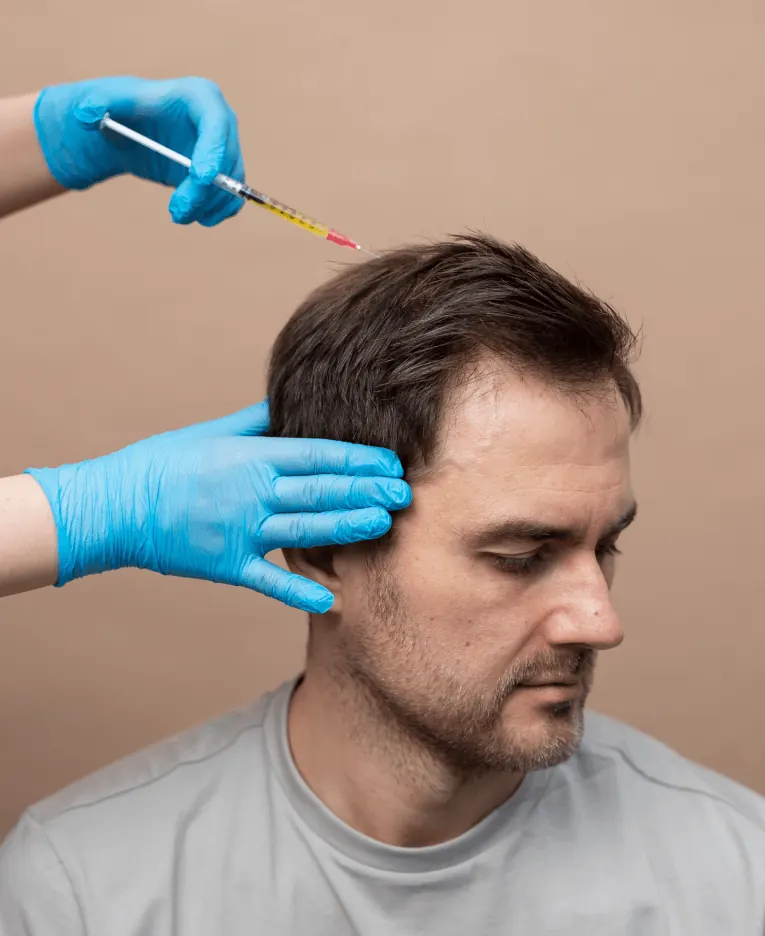
How a PRP session works
A typical session is quick and done in the clinic.
-
1
Scalp assessment
The doctor examines your scalp and hair loss to confirm PRP is right for you.
-
2
Blood collection
A small amount of blood is drawn from your arm, like a routine blood test.
-
3
Processing
The blood is spun in a centrifuge to separate and concentrate the platelet-rich plasma.
-
4
Scalp injections
The PRP is injected into the thinning areas of the scalp with fine needles.
-
5
Back to routine
You can go home right away. Your doctor will plan the next sessions.
PRP can help if you have
Early hair thinning
Hair fall or thinning that has started but has not become bald yet.
Female hair thinning
Diffuse thinning or a widening partition in women.
A hair transplant
As support before or after a transplant to help existing hair.
Find out if PRP is right for you
Our doctor will check your scalp and suggest the right treatment — PRP, a hair transplant, or both.
PRP hair treatment — FAQs
What is PRP hair treatment?
PRP (platelet-rich plasma) treatment uses a small amount of your own blood. It is processed to concentrate the platelets, which contain growth factors, and then injected into the scalp to support weak hair follicles.
Who is PRP suitable for?
PRP is most useful for early to moderate hair thinning in men and women, for people who are not yet ready for a transplant, and as support before or after a hair transplant.
How many PRP sessions are needed?
Most people need a series of sessions a few weeks apart, followed by maintenance sessions. The exact plan depends on your hair loss and is decided by the doctor.
Is PRP painful?
You may feel mild discomfort from the small injections. Numbing measures can be used to keep you comfortable, and each session is short.
Is there any downtime?
Very little. Most people go back to normal activities the same day. Mild redness or tenderness on the scalp settles within a day or two.
Can PRP replace a hair transplant?
No. PRP can strengthen existing thin hair, but it cannot regrow hair where follicles are already lost. For bald areas a hair transplant is needed; PRP can be combined with it.