
Thinning hair is common — and treatable
Hair loss in women usually shows as a widening partition, thinning on the top of the head or a receding front hairline. It can deeply affect confidence.
A female hair transplant moves healthy follicles from the back of the scalp to the thinning areas using FUE. The grafts are placed between existing hair and along the hairline in a soft, feminine pattern so the result looks completely natural.
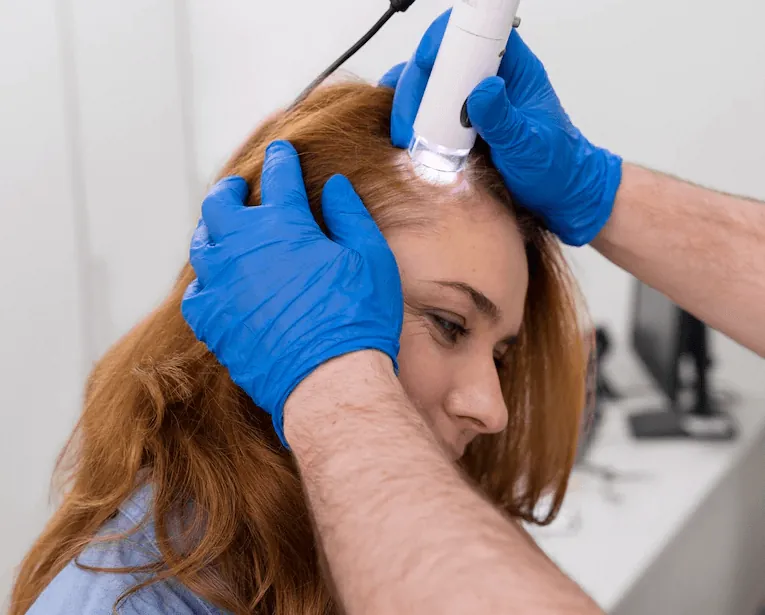
Because many cases of female hair loss have a medical cause, our doctor first examines your scalp and may advise tests before planning a transplant.
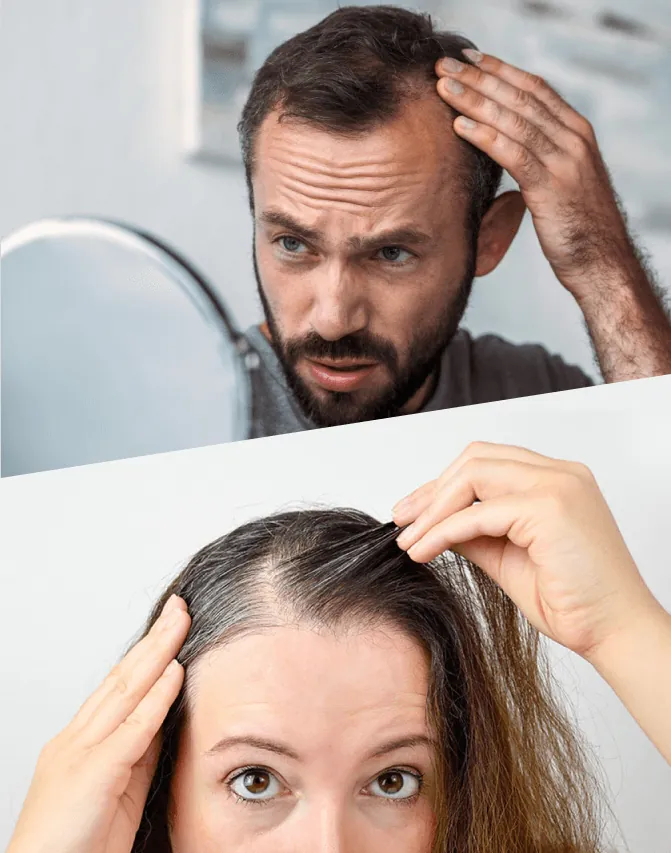
Female hair loss problems we treat
Widening partition
Thinning along the centre parting that makes the scalp visible.
High forehead
Hairline lowering for a naturally high or receding hairline.
Thinning on top
Diffuse thinning at the crown and top of the scalp.
Traction alopecia
Permanent loss at the temples from years of tight hairstyles.
Scars
Hair loss from injury, burns or surgery scars.
Thin eyebrows
Over-plucked or sparse eyebrows restored with single grafts.
How we plan a hair transplant for women
- Diagnosis first — scalp examination and, if needed, tests to find the cause of hair loss
- Donor check — making sure the donor area is strong enough
- Feminine design — a soft, rounded hairline and even density along the partition
- Supportive care — PRP or medicines to protect existing hair where needed
- Follow-up — regular check-ins as your new hair grows
Book a private consultation
Talk to our doctor about your hair loss in complete confidence — in the clinic, on video or on the phone.
Female hair transplant — FAQs
Can women get a hair transplant?
Yes. Women with thinning at the front or top of the scalp, a widening partition, a high forehead or hair loss from scars or tight hairstyles can benefit, as long as they have a healthy donor area.
What causes hair loss in women?
Common causes include female pattern hair loss, hormonal changes (such as after pregnancy, PCOS or thyroid problems), stress, nutritional deficiencies and traction from tight hairstyles. Some causes need medical treatment first, so a proper diagnosis is important.
Is female hair transplant different from male hair transplant?
Yes. Women usually have diffuse thinning rather than a bald area, and the hairline shape is different. The design, graft placement and sometimes the treatment plan (for example adding PRP) are planned specifically for women.
Will my head be fully shaved?
Not always. The amount of shaving depends on the area to be treated and the number of grafts. Your doctor will explain this during consultation.
Is the result permanent?
Transplanted hair comes from the permanent donor zone and keeps growing. Existing hair may continue to thin, so the doctor may suggest supportive treatment such as PRP.
Is my consultation private?
Yes. Consultations and treatment are completely confidential, and no photos are ever shared without your consent.